The life history of pink salmon leads to massive, recurring inputs of marine-derived nutrients into freshwater and terrestrial ecosystems, which can affect wild Atlantic salmon populations as well as surrounding ecological communities. Population control efforts through trapping have so far been effective; however, these measures have primarily been implemented in major rivers of commercial importance.
In this case study, we aim to improve the detection efficiency of molecular methods targeting pink salmon in smaller tributaries. We will also compare the performance of these molecular approaches with traditional survey methods.
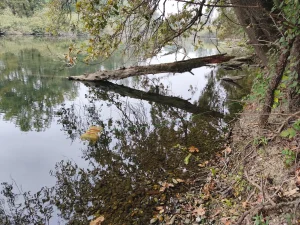
The case study will be conducted primarily through a recently initiated PhD project. This project will investigate the dispersal and distribution of pink salmon by analysing environmental DNA (eDNA) from water samples, as well as pink salmon carrion, and by assessing their effects on vegetation communities in coastal tundra ecosystems in northern Norway.
Environmental DNA has already been collected from streams, rivers and lakes in the summer of 2025 and samples were stored for the upcoming PhD project.
Environmental DNA samples were collected from streams, rivers, and lakes during the summer of 2025 and have been preserved for analysis within the PhD project. Over the course of the PhD (2026–2027), the candidate will analyse these samples and collect additional aquatic samples. In addition, a pilot study is planned to explore the use of insect-derived DNA (iDNA) collected from blowflies feeding on salmon carcasses to study their effect on terrestrial ecosystems. A bow-tie analysis will also be made to visualise the risks associated with pink salmon spread, as well as the potential ecological and economic consequences in northern Norway.
The team recently attended in the “4th International Seminar on Pink salmon in the Barents region and in Northern Europe 2025”, in which experts presented all recent research and management efforts to monitor and manage pink salmon within Norway.