North Italy: Lombardy
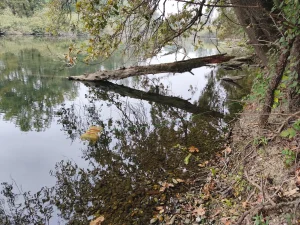
Within the CaSt2 project, control actions targeting the invasive red swamp crayfish (Procambarus clarkii) were implemented in three wetland areas along the right bank of the Ticino River (Lombardy, Northern Italy). Although ecologically similar, the sites differ in management and human pressure.
The first site, the Integral Natural State Reserve Bosco Siro Negri, is a low-impact area managed by the University of Pavia where crayfish control was carried out exclusively by researchers. Here, researchers removed 68 crayfish in 2025, with a male-biased sex ratio of approximately 2:1. The second site, Baia del Re, a restored oxbow lake close to the city of Pavia and subject to higher anthropogenic pressure, recorded 55 individuals, also showing a male-biased sex ratio of about 2:1. Control activities at this site combined scientific monitoring with three citizen science OpenLab events.
The third site, recently added to the project, is a wetland restored in 2024 and managed by the Italian Association for Bird Protection (LIPU). Surveys in 2025 revealed a rapid colonisation by P. clarkii, leading to intensified control efforts. In this area, 271 crayfish were collected, with a slightly female-biased population (male/female ratio: 0.85).
Crayfish populations were monitored twice monthly using baited traps across all sites, complemented by artificial refuges to target juveniles only in the protected reserve. In 2025, a total of 394 crayfish were removed, with the highest numbers recorded in the newly restored wetland. Overall, seven OpenLabs events engaged 105 citizens, demonstrating the key role of public participation in invasive species management (linking to Work Package 5).
All collected data contribute to the official Lombardy Regional database supporting long-term management of P. clarkii.
Central Italy: Tuscany
A population of the red swamp crayfish is present in Lake Romena, an artificial pond, threatening the native white-clawed crayfish Austropotamobius pallipes complex present in a national park close by. The aims of the study are (1) reducing the P. clarkii population abundance through trapping activities; (2) improve the control effectiveness by using three different trap types (two types of wire mesh traps, cylindrical and rectangular, and the Artificial Refuge Traps, ART); and (3) assessing the potential spread of P. clarkii outside the lake by means of aquatic static cameras (link to WP2). The control activities, started in 2022, registered a decrease of 82% in the abundance index Catch Per Unit Effort (CPUE) of crayfish population in 2025: cylindrical traps, with larger mesh and narrower entrance, trapped the highest number of individuals (CPUE: 1.35), especially the larger ones (cephalothorax length; CL ≥ 35 mm) and the males. Rectangular traps (CPUE: 0.61), with smaller mesh and wider entrance, caught relatively more small (CL < 35 mm) males while
ARTs were the less efficient (CPUE: 0.19) but captured relatively more females and smaller individuals. The surveys conducted with cameras did not reveal the presence of P. clarkii downstream of the lake. These results will be presented at the ICAIS 2026 Conference in North Ireland. A master thesis in Natural Sciences was defended on this case study in December 2025.
Considering the low crayfish abundance recorded in 2025, in 2026 trapping will be maintained and integrated with new techniques (like manual remove of females pleopods) to further decrease the population abundance and assess the feasibility of a possible eradication, while the number of aquatic cameras will be increased.